Freesat can deliver reliable subscription free TV, but it depends on one simple requirement. The dish must be able to see the satellite clearly.
That does not mean the dish needs an open view of the whole sky. It means the dish needs a clear, accurate path to the part of the sky where the signal comes from. When that path is blocked, even slightly, picture break up, missing channels and intermittent faults can follow.
How Freesat receives its signal
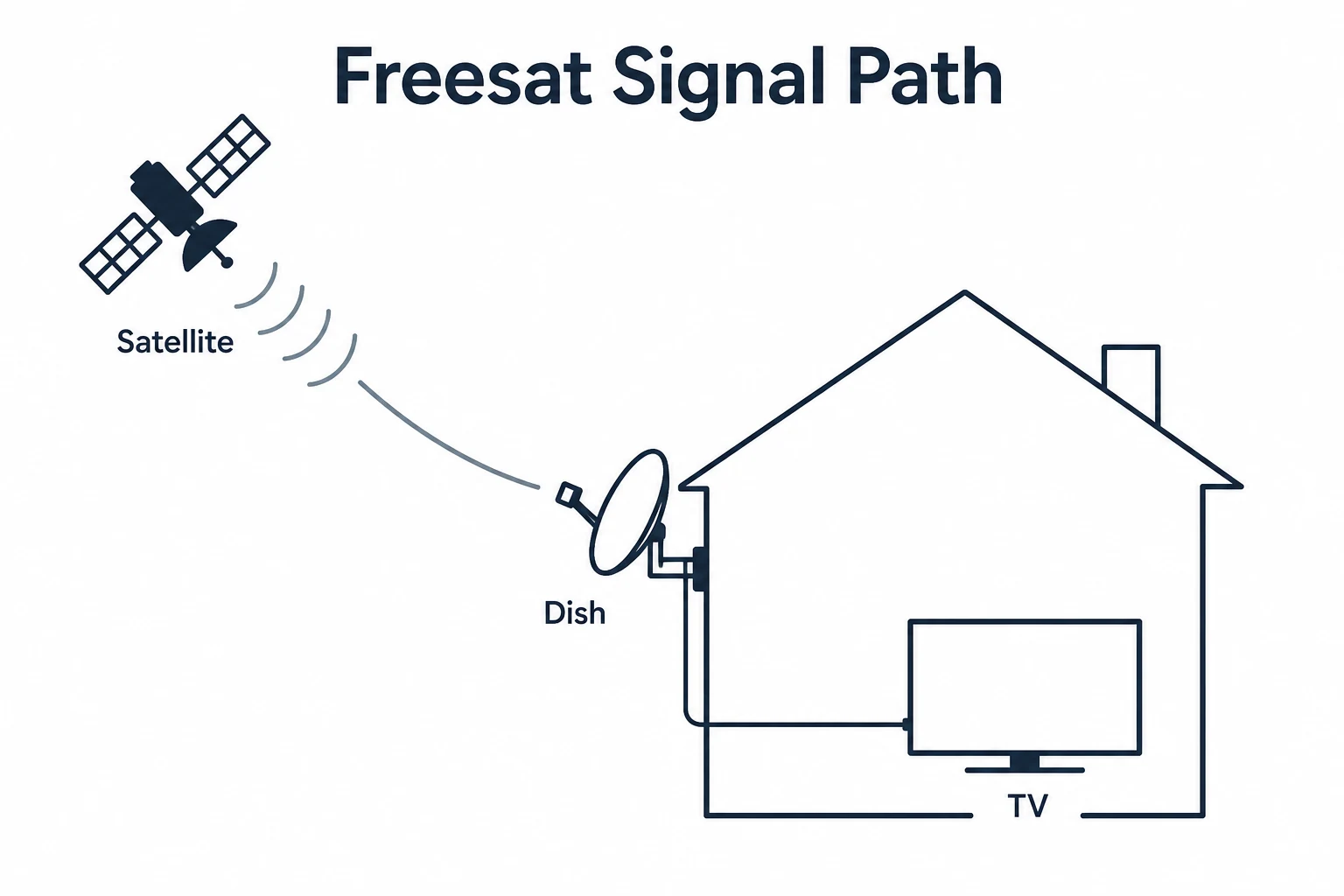
Freesat works through a satellite dish, not through a standard TV aerial. The dish is shaped to collect a weak signal from space and focus it onto the LNB, which is the small receiver mounted on the arm at the front of the dish. From there, the signal travels through cable into your Freesat box or compatible television.
Because the satellite is in a fixed position relative to the property, the dish must be aimed very precisely. A small movement at the dish can make a big difference by the time that angle reaches the satellite path. This is why dish alignment is more than simply pointing it in roughly the right direction.
A clear line of sight means there is nothing significant between the dish and the satellite signal. Walls, roofs, trees, scaffolding, nearby buildings and even dense growth in a garden can all interfere. The dish does not need to be placed as high as possible in every case, but it does need a suitable position with an unobstructed signal path.
If you are planning a new setup, TV Local explains its Freesat installation service in more detail for homeowners who want the system fitted and aligned correctly from the start.
What can block a Freesat dish
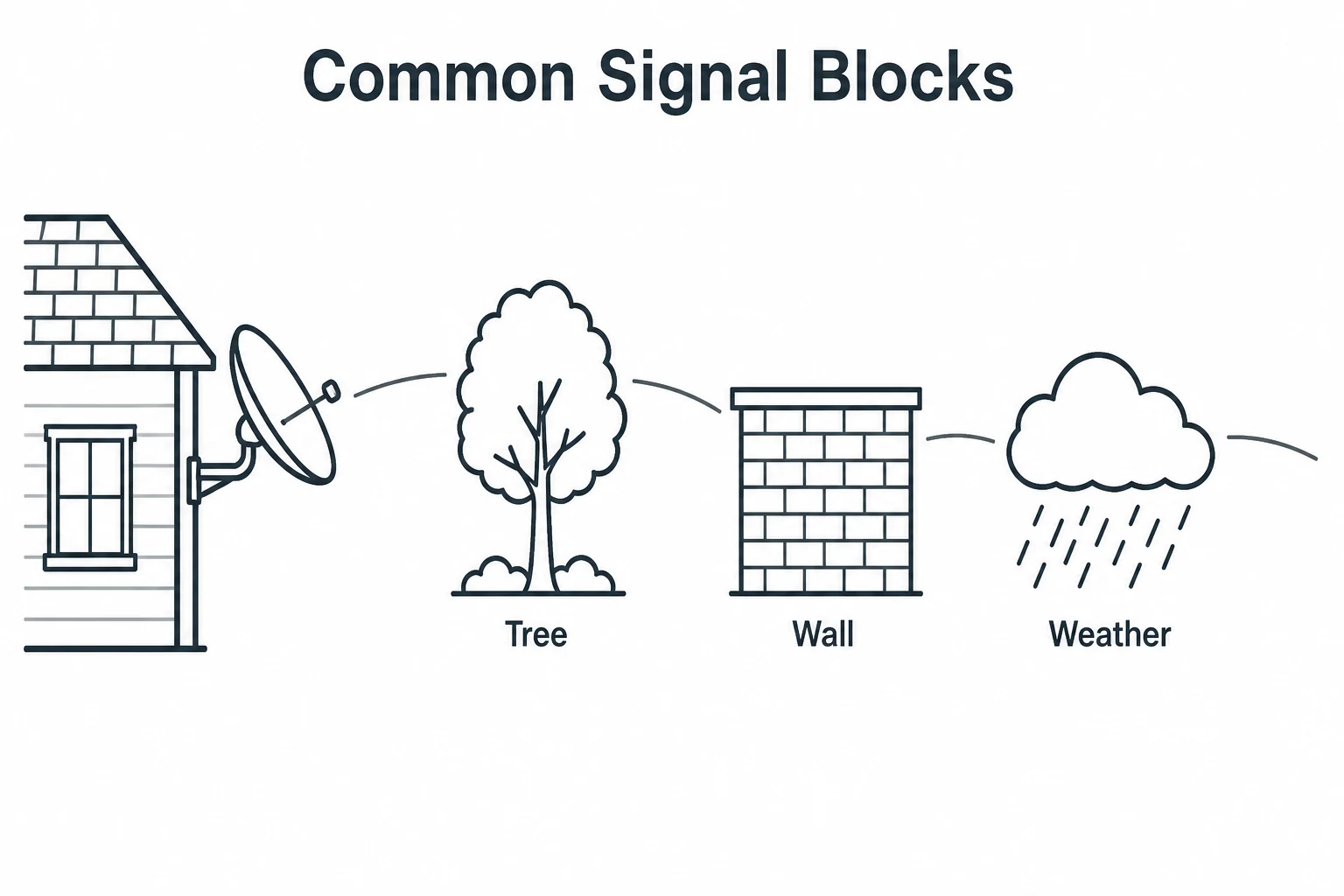
The most obvious obstructions are solid objects. A wall, chimney, extension, garage, outbuilding or neighbouring structure can block the signal path if the dish is positioned behind it. The dish may look exposed from ground level, but the satellite angle can still pass through an obstacle higher up.
Trees are another common cause of reception trouble. Leaves, branches and seasonal growth can weaken or interrupt the signal. A dish that worked well in winter may struggle once trees are in full leaf. Wind can also move branches in and out of the signal path, which can make the fault appear random.
Temporary obstructions can be just as frustrating. Scaffolding, roof work, exterior repairs and new building work nearby can all affect reception. In some cases, the dish itself may not be faulty at all. The problem is that the clear path it used to have has changed.
Weather does not usually block the signal in the same way as a building or tree, but heavy rain, snow on the dish or strong wind moving a poorly secured dish can expose an already marginal setup. A well positioned and firmly mounted dish gives the system more room to cope with normal changes in conditions.
Why dish placement matters as much as alignment
Alignment and placement are closely linked, but they are not the same thing. Alignment is the fine adjustment of the dish angle. Placement is where the dish is mounted in the first place. A perfectly aligned dish in the wrong position will still struggle if something sits in the signal path.
Good placement considers the building, the cable route, access for future service, exposure to wind and the available view of the satellite. The neatest looking position is not always the strongest technical position, and the highest position is not always necessary. The right choice balances reception quality with a tidy and practical installation.
Professional installers use signal meters to check strength and quality at the dish, not just whether a picture appears on screen. This matters because a picture can appear to work during installation while still leaving too little margin for poor weather or slight movement. Signal quality is the figure that often reveals whether the dish is truly happy.
If a dish has moved, been damaged or started behaving unpredictably, the symptoms may match the issues described in TV Local’s guide to signs your satellite dish is misaligned. Misalignment is not the only possible cause, but it is one of the first things worth checking.
Common symptoms of poor line of sight
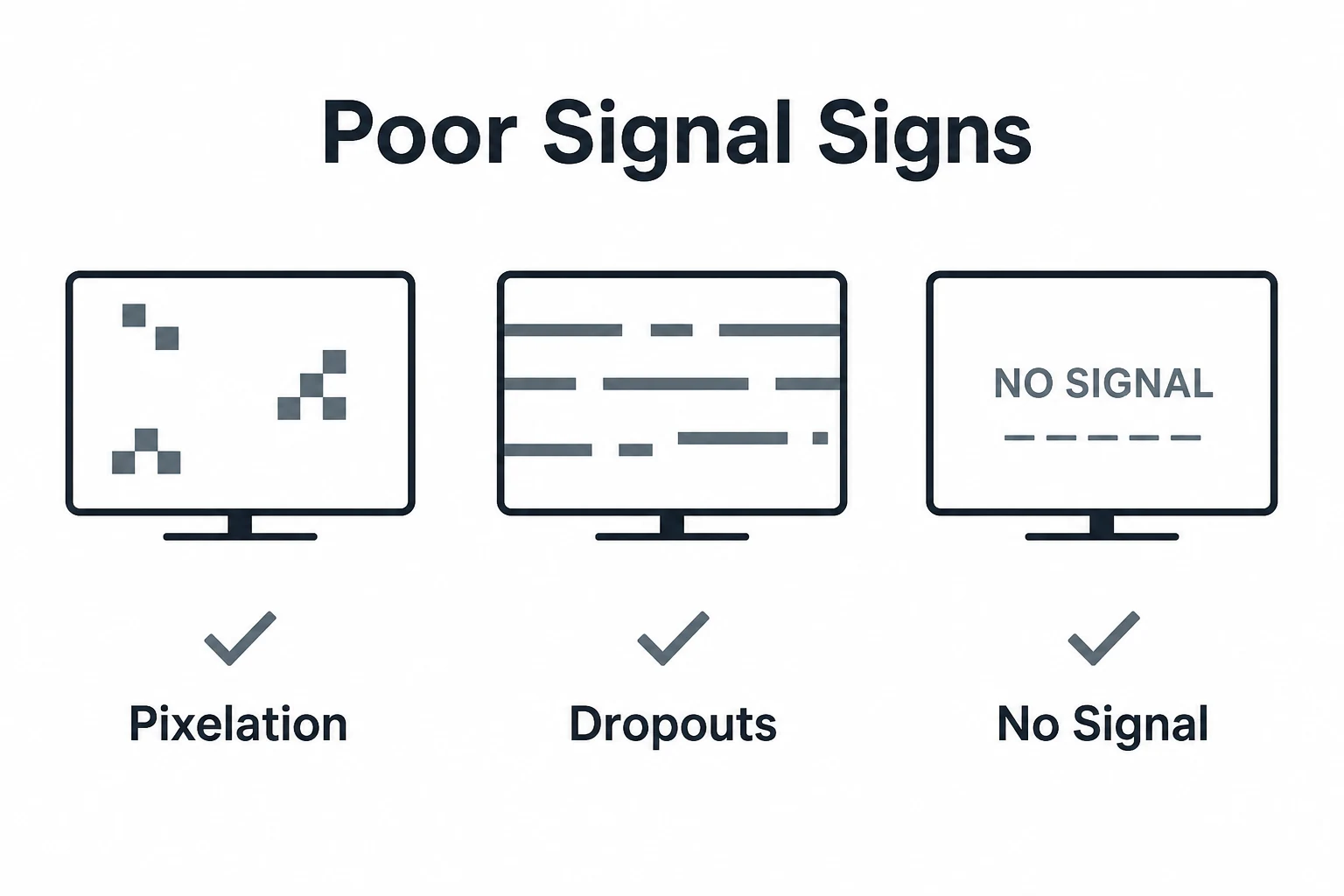
A blocked or partly blocked signal path can show up in several ways. The most familiar symptom is picture pixelation, where the image breaks into blocks or freezes. Sound may cut in and out at the same time. Some channels may work while others fail, because not every channel is carried in exactly the same part of the received signal.
You may also see messages about no signal, weak signal or channels not being available. These messages can be misleading because the fault may not be inside the television or Freesat box. The receiver is simply reporting that the signal arriving through the cable is not good enough.
Intermittent faults are especially common when the obstruction is partial. For example, moving branches may affect the signal only when the wind blows. A dish that is slightly loose may work on calm days and fail after bad weather. A cable or connector issue can also mimic reception trouble, which is why the whole installation should be checked rather than assuming one single cause.
It is worth noting that a Freesat dish should not be judged only by whether it looks intact. A dish can look normal from the ground but still be fractionally out of position, poorly sighted or affected by a deteriorating LNB or cable connection.
Why a professional setup prevents avoidable faults
A professional Freesat installation starts with the property, not just the equipment. The installer looks for a mounting position with a clear view, a secure fixing point and a sensible cable route. That judgement helps avoid the common mistake of placing a dish somewhere that seems convenient but leaves the signal vulnerable.
The dish then needs careful alignment. This includes the horizontal angle, the vertical elevation and the LNB position. Each adjustment affects the quality of the signal. Done properly, the setup gives the receiver a clean feed and helps prevent avoidable call backs caused by weak or unstable reception.
Professional installation also helps with cable quality and weatherproofing. External cable runs, connectors and entry points should be fitted neatly and protected from water. A clear line of sight will not solve every issue if the cable is damaged or poorly terminated, so the full route from dish to receiver matters.
For homeowners comparing options for a new dish or wider TV reception setup, TV Local’s guide to expert satellite dish installation gives more context on why fitting and setup quality make a difference.
When an existing Freesat dish may need attention
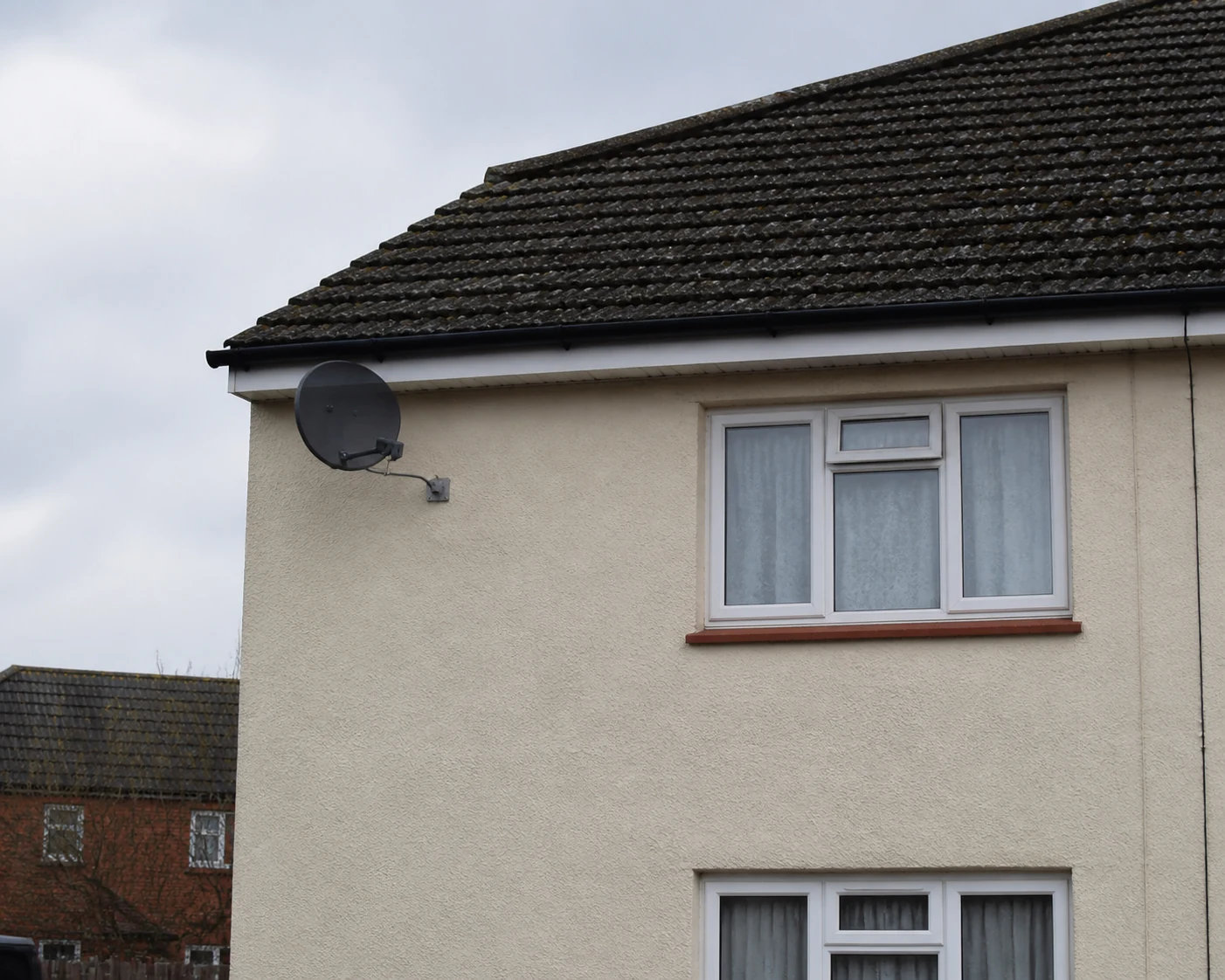
If your Freesat system used to work well but now struggles, something has changed. The dish may have moved in strong wind, the LNB may be wearing out, a connector may have taken in water or the surrounding environment may now be obstructing the signal path.
Start with simple checks indoors. Make sure the Freesat box or television is powered correctly, the input is selected and the satellite cable is firmly connected. If those checks do not help, avoid twisting the dish by hand. Even a small adjustment can make the signal worse and may make diagnosis harder.
Outside, look for obvious changes around the dish from a safe position. New growth, nearby works or visible movement in the dish bracket may point to the cause. However, roofline and ladder work should be handled safely, with the correct equipment.
If the system is older, it may also be useful to consider the condition of the dish itself. TV Local has a helpful guide on how long a satellite dish should last, including signs that parts of the installation may be ready for inspection or replacement.
- Freesat needs a clear signal path between the dish and the satellite.
- Trees, buildings, rooflines, scaffolding and dish movement can all affect reception.
- A picture appearing on screen does not always mean the dish has enough signal margin.
- Professional placement, alignment, cabling and weatherproofing help prevent avoidable reception issues.
- If reception has changed, the cause may be outside the home rather than inside the television or Freesat box.
Frequently asked questions
Does a Freesat dish need to be on the roof?
Not always. The dish needs a clear line of sight and a secure fixing point. A wall, chimney or other suitable position may work if it gives the dish the right view and keeps the installation stable.
Can trees really stop Freesat from working?
Yes. Trees can weaken or block the satellite signal, especially when they are in full leaf or moving in wind. A dish may work at some times of year and struggle at others if branches sit in the signal path.
Why do some Freesat channels work while others do not?
Different channels can be affected differently when signal quality is low. Partial obstruction, slight misalignment, cable issues or LNB problems can leave some channels watchable while others break up or disappear.
Should I move my Freesat dish myself if the signal is poor?
It is better not to adjust the dish by guesswork. Freesat alignment is precise, and small movements can make reception worse. A professional can test the signal properly and check whether the issue is alignment, obstruction, cabling or equipment condition.
Need a clearer Freesat signal?
If your Freesat reception is unreliable or you are planning a new installation, TV Local can help with practical advice, careful dish placement and a tidy professional setup.