Home CCTV can make your property feel safer, but many homeowners pause at the same question: what if a camera can see next door?
The good news is that domestic CCTV is usually straightforward when it is planned properly. The key is to record what you genuinely need, avoid unnecessary intrusion and handle footage responsibly.
Is home CCTV legal in the UK?
Yes, home CCTV is legal in the UK. Homeowners can install cameras to protect their property, vehicles, garden, entrances and outbuildings. Problems are more likely to arise when cameras capture areas beyond your boundary, such as a neighbour’s garden, shared access path, pavement or road.
If your CCTV only records within your own property, data protection rules will usually be less of a concern. If it records outside your boundary, you may need to follow data protection principles. In simple terms, that means having a clear reason for recording, keeping the coverage proportionate, storing footage securely and not keeping it for longer than necessary.
This does not mean every camera facing near a boundary is unlawful. It means the setup should be justified and carefully positioned. A camera covering your driveway entrance may incidentally include a small part of the pavement, for example. A camera pointed directly into a neighbour’s windows or private garden is much harder to justify.
When neighbour privacy becomes an issue
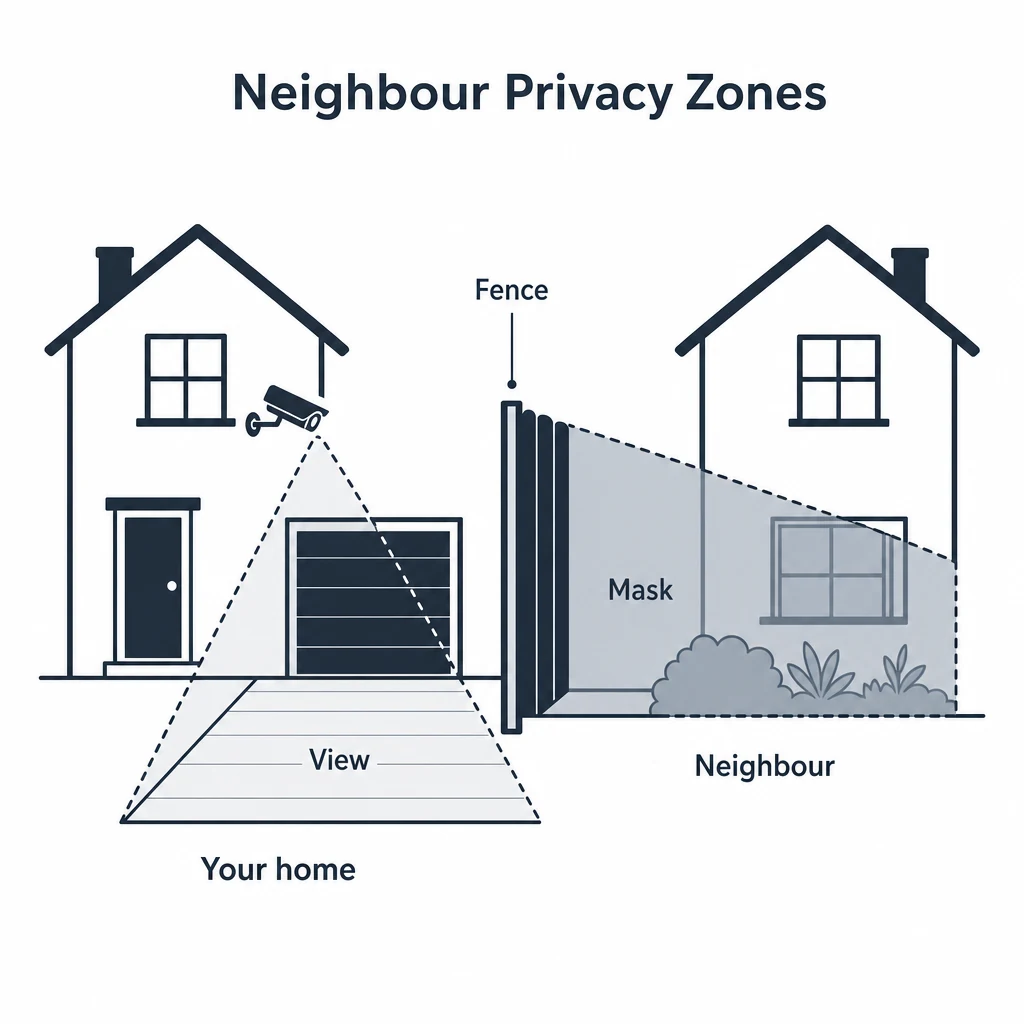
Neighbour privacy concerns usually come down to what the camera can see, how much it records and whether the recording feels intrusive. A fixed camera aimed at your front door is very different from a camera that overlooks someone else’s patio, bedroom window or private parking space.
Common causes of disputes include cameras mounted too high or at the wrong angle, wide-angle lenses capturing more than needed, doorbell cameras recording shared paths, and audio recording being left on when it is not necessary. Audio is often more intrusive than video because it may capture conversations from people who do not realise they are being recorded.
It is also worth thinking about perception. Even if your intention is entirely reasonable, a neighbour may feel uncomfortable if a visible camera appears to be aimed at their home. A short, polite conversation before or after installation can prevent misunderstandings, especially where properties are close together.
If you are still deciding between fitting a system yourself and using an installer, TV Local’s guide to DIY versus professional CCTV installation explains the practical differences clearly.
How to position cameras responsibly
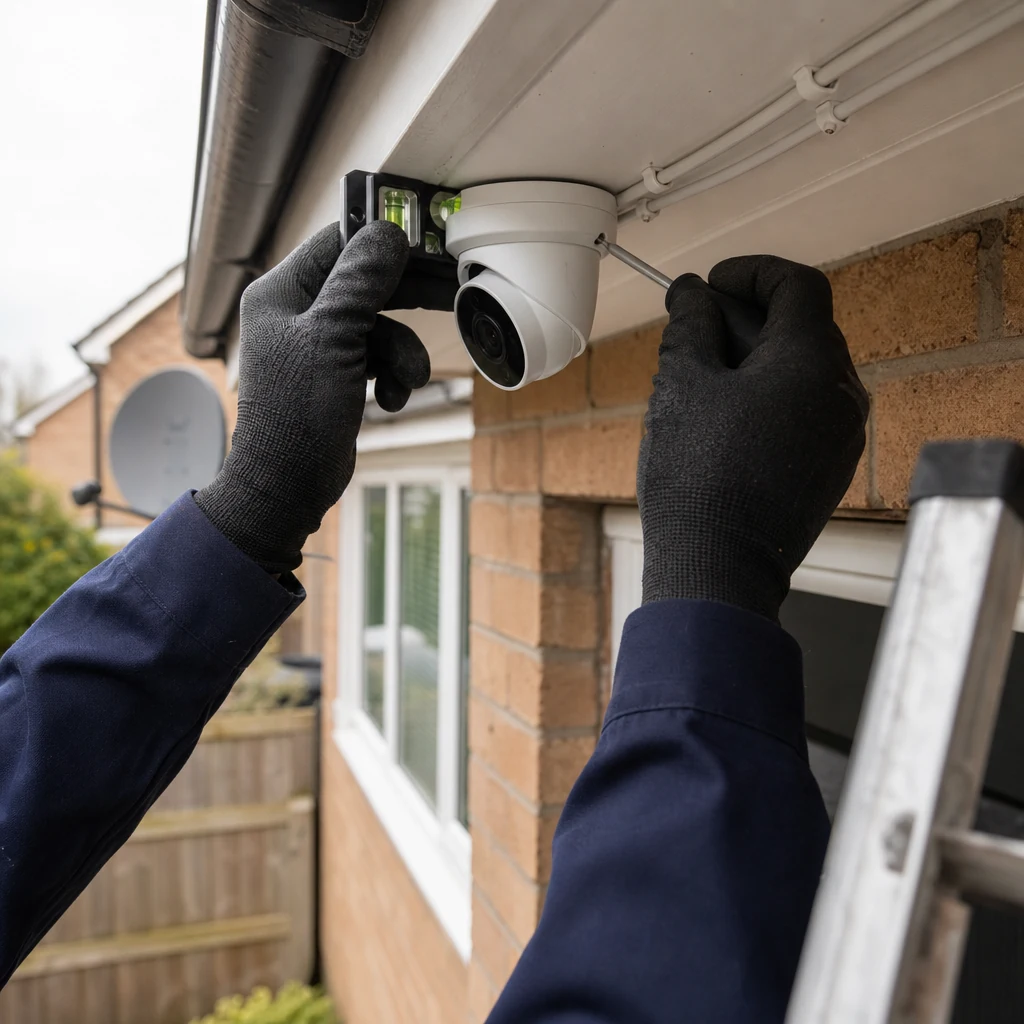
Responsible CCTV positioning starts with purpose. Before choosing camera locations, decide what you need to protect. This may include a front door, rear entrance, driveway, garage, side gate or garden building. Once the purpose is clear, the camera angle can be kept tighter and more proportionate.
Good positioning usually means:
- Pointing cameras towards your own doors, windows, vehicles and access points.
- Avoiding direct views into neighbouring windows, gardens and private spaces.
- Using the narrowest useful field of view rather than recording everything nearby.
- Mounting cameras at a height that helps security without creating unnecessary overlooking.
- Using privacy masking where suitable, so parts of the image are blocked from recording.
Modern systems can often be adjusted to reduce privacy concerns without weakening security. Lens choice, camera height, recording zones, motion detection areas and privacy masks all make a difference. For more on features that can improve security while keeping control over what is recorded, see TV Local’s guide to advanced CCTV technology for the home.
Handling footage, signs and access requests
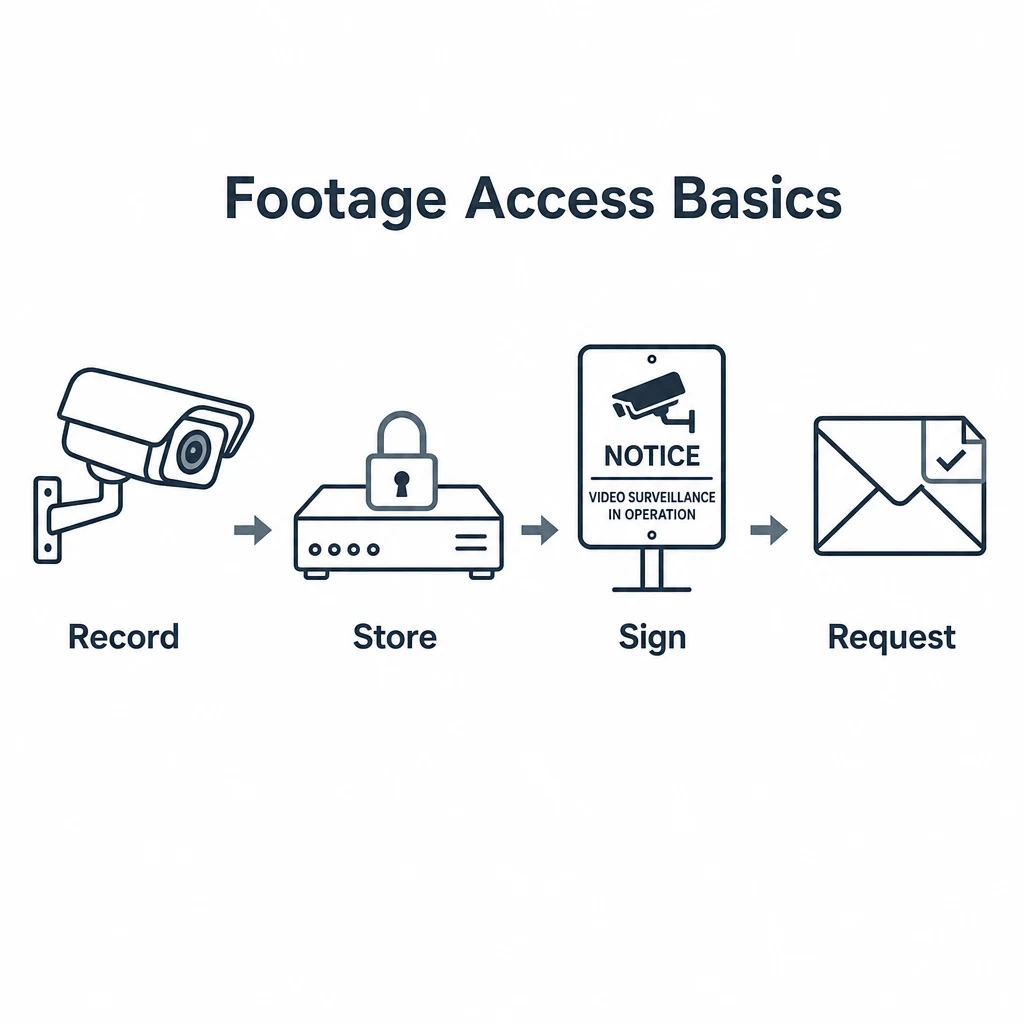
If your cameras record beyond your boundary, it is sensible to act transparently. A small, clear CCTV sign can help people understand that recording is taking place. The sign does not need to be dramatic; it simply helps show that you are not trying to record secretly.
Footage should be protected with secure passwords, sensible app settings and limited access. Avoid sharing clips casually, especially on social media or messaging groups, unless there is a clear and legitimate reason. If footage is needed for an incident, it can be shared with the appropriate authorities or relevant parties in a controlled way.
You should also avoid keeping recordings indefinitely. Many systems allow automatic overwrite after a set period. The right retention time depends on your circumstances, but the general principle is to keep footage only for as long as it is needed for security purposes.
If someone asks whether you have footage of them, take the request seriously. Where data protection rules apply, people may have rights in relation to their personal data. If in doubt, check current official guidance or seek proper advice, especially if a dispute has already developed.
Why professional installation helps prevent avoidable issues

A professional installer does more than put cameras on walls. They assess the property, identify the areas that genuinely need coverage and help choose positions that support security without creating unnecessary privacy problems.
This is particularly useful where entrances are close to neighbouring homes, where driveways are shared, or where one camera needs to cover a tight angle. An installer can test the live image before final fixing, adjust the field of view and discuss whether features such as privacy zones, motion-only recording or lighting adjustments are suitable.
Professional cable routing also matters. Neat external cabling, secure fixings and careful drilling help the system look tidy and work reliably. The same attention applies indoors, where recorders, monitors and app access should be set up in a way that is easy for the household to use.
For homeowners who want a system planned with privacy and practical security in mind, TV Local offers professional CCTV installation for domestic properties.
A simple pre-installation checklist
Before fitting CCTV, run through a few practical questions. They will help you make better decisions and reduce the chance of neighbour concerns later.
- What specific areas do you need to protect?
- Can each camera be aimed mainly within your own boundary?
- Is audio recording necessary, or can it be switched off?
- Would a privacy mask help block a neighbouring window or garden?
- Who will have access to the footage and app?
- How long will recordings be stored?
- Would a visible sign make the setup clearer to visitors?
The aim is not to make CCTV complicated. It is to make sure the system is proportionate, respectful and effective from the start.
- Home CCTV is legal, but cameras should be positioned proportionately.
- Privacy concerns usually arise when cameras capture neighbouring private areas.
- Audio recording can be especially intrusive and should only be used when justified.
- Privacy masking, careful angles and secure footage storage can reduce problems.
- Professional installation helps balance security needs with neighbour privacy.
Frequently asked questions
Can my CCTV record a neighbour’s property?
It is best to avoid this where possible. If a small amount is captured incidentally, make sure it is necessary, proportionate and limited. Avoid aiming cameras directly at private areas such as windows, gardens or seating areas.
Do I need a CCTV sign at home?
If your cameras record beyond your own boundary, a clear sign is a sensible step. It helps show transparency and lets visitors, neighbours and passers-by know CCTV is in use.
Should I record audio on home CCTV?
Usually, video is enough for home security. Audio can capture private conversations and may be harder to justify, so many homeowners choose to switch it off unless there is a clear need.
Can a professional installer help with privacy settings?
Yes. A good installer can adjust camera angles, set motion zones, apply privacy masking where available and explain how to manage footage securely.
Planning home CCTV?
TV Local can help you choose sensible camera positions, neat installation routes and privacy-aware settings for a reliable home security setup.