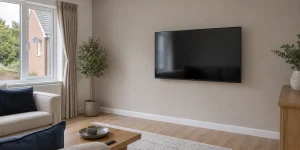
Smart TVs have changed how many households in the UK watch television. Instead of relying purely on traditional broadcasts, viewers can now access apps such as BBC iPlayer, Netflix, and ITVX directly from their TV.
This shift has made it easier to watch content on demand, often without needing any additional equipment.
That said, it does raise a fairly common question. If everything seems to be available through apps, is there still any point in having a TV aerial?
The answer is not entirely straightforward, as it largely depends on how you prefer to watch television and what kind of access you expect day to day.
What Is a Smart TV and How Does It Work?
A smart TV is essentially a television that connects to the internet and allows you to use apps, browse content, and stream video without needing external devices.
Most modern models come with built-in platforms that give access to a wide range of services, from catch-up TV to subscription-based streaming.
However, it is worth noting that smart TVs have not replaced traditional features entirely.
They still include a built-in tuner, which means they can receive broadcast signals through an aerial and access services like Freeview. So while streaming is a big part of the experience, it is not the only option available.
When You Still Need a TV Aerial
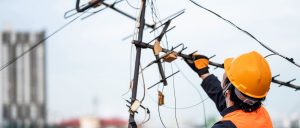
You will still need a TV aerial if you want to watch live television through Freeview.
This includes popular UK channels such as BBC One, ITV, and Channel 4, which are broadcast over the air and received via an aerial connection.
There is also a practical side to this. Watching live TV through an aerial does not rely on your internet connection, so it tends to be more stable.
In areas where broadband speeds are slower or less reliable, an aerial can provide a more consistent viewing experience, particularly for live events like sports or news.
When You Do Not Need a TV Aerial
If you mainly use your TV for streaming, you may not need an aerial at all.
Services like BBC iPlayer, Netflix, and ITVX offer a wide range of content, including films, series, and in some cases live TV, all delivered over the internet.
That said, this setup depends heavily on your broadband connection. A slow or unstable connection can lead to buffering or reduced picture quality.
There is also the matter of data usage, which may be relevant if your internet package has limits or shared usage across multiple devices.
Differences Between Freeview and Streaming Services
Freeview and streaming services offer different viewing experiences.
Freeview, accessed via an aerial, is free once installed and provides a set range of live channels without ongoing subscription costs. It is straightforward and reliable, especially for everyday viewing.
Streaming services, on the other hand, offer more flexibility. You can watch what you want, when you want, and often without adverts, depending on the platform.
However, many services require a monthly subscription, and not all live content is always available in the same way it is through traditional broadcasts.
Alternative Options to Aerials
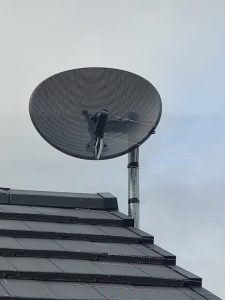
If you do not want to use an aerial, there are other options available. One of the main alternatives is Freesat, which uses a satellite dish instead of an aerial to provide access to live TV channels.
There are also internet-based TV services that combine live channels with on-demand content.
These tend to rely entirely on broadband, which can be convenient, although they may not suit every household, particularly where internet speeds are inconsistent.
Factors to Consider Before Deciding
Before deciding whether you need an aerial, it is worth thinking about your internet connection. If your broadband is fast and reliable, streaming may cover most of your needs.
If not, an aerial could still play an important role in your setup.
It also comes down to how you watch TV. If you regularly watch live broadcasts, an aerial is likely to be useful. If you prefer on-demand content, you might find that streaming services are enough on their own.
Budget can also be a factor, as aerial installation is usually a one-off cost, whereas streaming often involves ongoing subscriptions.
Conclusion
Smart TVs have certainly reduced the reliance on traditional aerials, but they have not made them completely obsolete.
For many households, an aerial is still the easiest and most reliable way to access live television.
In reality, the best setup often involves a mix of both.
Using an aerial for live channels and streaming services for on-demand content gives you flexibility and ensures you are not relying on a single method for all your viewing.