When TV reception problems crop up, it’s easy to assume the equipment is at fault. In reality, the biggest influence on signal quality is often the location of the property itself. Factors such as surrounding terrain, nearby obstructions and exposure to wind can all affect how well a dish or aerial performs.
This guide explains how your environment plays a role in TV reception and offers practical advice on choosing the right type of dish or aerial, particularly for coastal, rural and high-ground properties.
Why Location Matters More Than You Think
TV signals, whether terrestrial or satellite, rely on clear paths to reach your home. Anything that blocks, weakens or interferes with that path can cause picture break-up, missing channels or complete signal loss.
Two homes using identical equipment can have very different results simply because one is shielded by buildings or hills while the other has a clear line of sight. That’s why understanding your surroundings is essential before choosing hardware.
How Terrain Affects TV Reception
Hills, Valleys and Elevation
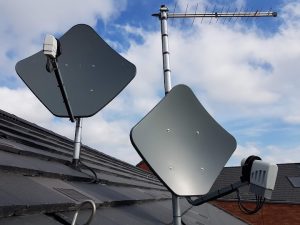
Properties in valleys or behind hills often struggle with terrestrial TV signals because the transmitter signal cannot travel directly to the aerial. In contrast, homes on elevated ground may receive stronger signals but can be more exposed to weather.
In areas with uneven terrain, satellite dishes are often more reliable than aerials, as they connect directly to satellites rather than relying on local transmitters.
Urban vs Rural Locations
Urban areas can suffer from signal reflection and interference caused by surrounding buildings, while rural properties may be located far from transmitters altogether. In remote locations, a satellite dish often provides more consistent reception than a standard TV aerial.
Obstructions That Can Interfere with Your Signal
Natural Obstructions
Trees, hedges and even seasonal foliage can disrupt signals, especially during the summer months when growth is at its peak. A signal that works well in winter may deteriorate in spring and summer if vegetation blocks the line of sight.
Man-Made Obstructions
Nearby buildings, scaffolding, roof extensions and chimneys can all affect reception. Temporary obstructions such as scaffolding may cause short-term issues, while permanent structures need to be accounted for during installation.
Professional installers typically assess both current and potential future obstructions to avoid repeat problems.
Wind Exposure and Weather Considerations
 High winds are a common cause of aerial and dish misalignment, particularly in exposed areas. Even a small amount of movement can be enough to disrupt reception.
Coastal and High-Ground Properties
Homes near the coast or on elevated ground are often subject to stronger winds and harsher weather. Salt in the air can also accelerate corrosion of brackets and fixings.
In these locations, heavier-duty mounts, rigid brackets and weather-resistant materials are essential to ensure long-term reliability.
Dish or Aerial: Which Is Right for Your Property?
When a TV Aerial Is Suitable
- Strong Freeview coverage in your area
- Minimal obstructions between your home and the transmitter
- Sheltered locations with limited wind exposure
In the right conditions, a TV aerial can provide excellent picture quality with minimal equipment.
When a Satellite Dish Is the Better Choice
- Poor terrestrial signal availability
- Rural or remote locations
- High-ground or obstructed properties
Satellite TV often offers more consistent reception in challenging environments, as it bypasses many of the issues caused by terrain and distance.
Choosing the Right Hardware
Aerial Types and Gain Levels
High-gain aerials can help in weak signal areas, but more gain isn’t always better. Over-amplification can cause interference, so aerial choice should be matched to the actual signal conditions.
Dish Size and Mounting Options
In fringe reception areas, a slightly larger dish can improve signal stability. Secure mounting is equally important, particularly in windy locations.
Cabling and Fixings
Weather-resistant cabling, sealed connectors and corrosion-resistant brackets all contribute to long-term performance. Cutting corners here often leads to future signal issues.
Why a Professional Assessment Helps
Choosing equipment based purely on guesswork can lead to repeat call-outs and ongoing frustration. A professional assessment considers terrain, obstructions, wind exposure and signal strength before recommending the most suitable solution.
At TV Local Scotland, installations are tailored to the property rather than relying on a one-size-fits-all approach. This helps ensure reliable reception, even in challenging coastal or high-ground locations.
Common Mistakes to Avoid
- Assuming standard equipment will work everywhere
- Ignoring future obstructions such as tree growth
- Underestimating the impact of wind exposure
- Installing without testing signal strength
Final Thoughts
Choosing the right dish or aerial isn’t just about the equipment itself. Your location, surroundings and exposure to the elements all play a major role in reception quality.
By taking these factors into account and seeking expert advice when needed, you can avoid many common signal problems and enjoy consistent TV viewing year-round. For properties in challenging locations, a tailored installation can make all the difference.