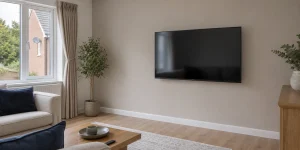
A wall mounted TV can damage plasterboard if the bracket is attached incorrectly, the fixings are unsuitable or the wall cannot support the load. However, plasterboard does not automatically mean you have to keep your television on a stand.
The important questions are what sits behind the plasterboard, how the bracket transfers weight into the wall and where the cables will go. Understanding those details helps you choose a secure installation and avoid cracked plaster, loose fixings and unnecessary repairs.
What causes damage when a TV is mounted on plasterboard?
Plasterboard forms the finished surface of many internal walls, but it is not always the main structural support. Damage usually happens when the mounting arrangement asks that surface to carry more force than it can safely withstand.
Unsuitable fixings may loosen or pull through the board. Excessive tightening can crush the material around a fixing, while repeated movement from an extending bracket can gradually enlarge holes. Existing damp, cracks or previous repairs may also affect the strength of the mounting area.
A secure installation needs to account for more than the television alone. The bracket and any attached accessories add weight, and pulling the screen away from the wall increases leverage on the fixings.
Some alteration is normal. Mounting typically leaves screw holes, and concealed cable routes may require openings. These planned changes are different from damage caused by a failing fixing. If you later remove the TV, expect some filling and redecoration rather than a completely untouched wall.
The wall behind the plasterboard matters

Two walls can have the same painted finish but need very different mounting methods. A useful first step is identifying the construction rather than choosing fixings by appearance alone.
- Timber stud walls: These have a timber framework behind the board. Suitable attachment into sound studs can provide support, but stud positions may not line up with your preferred screen position.
- Metal stud walls: These need an approach suited to the framing system. A method used for timber studs should not simply be copied across.
- Plasterboard bonded to masonry: Often called dot and dab, this construction has a gap between the board and the masonry. Fixings must suit the backing material and account for the gap without crushing the plasterboard.
Board thickness, the number of layers and the condition of the backing all matter. Tapping the wall can offer clues, but it does not confirm that a mounting point is suitable or free from pipes and cables.
Some plasterboard fixing systems are designed for specific TV mounting applications. Their suitability depends on the complete installation and manufacturer guidance, not a headline weight rating alone. Simply adding more plugs does not establish a safe load capacity.
How bracket choice affects the load on your wall

A bracket must suit both the television and the wall. Check the TV weight and its VESA mounting pattern, which describes the spacing of the mounting holes on the back. Screen size alone is not enough to establish compatibility.
The bracket style also changes how forces act on the wall:
- Fixed brackets: These hold the screen close to the wall, generally reducing leverage compared with an extended arm.
- Tilting brackets: These allow viewing angle adjustment, but still need suitable support and clearance.
- Full motion brackets: These let the TV swivel and extend. Their movement places greater demands on the mounting arrangement, particularly when the screen is pulled forwards.
A bracket rated for the television does not automatically make the wall connection suitable. The bracket, fixings and supporting structure must work together.
Consider how you actually watch TV before choosing maximum movement. A fixed or tilting bracket may meet your needs without an extending arm. Where movement is useful, professional assessment helps establish the appropriate support rather than relying on guesswork.
Plan cables and sockets before drilling

Cable planning protects the wall finish and makes the TV easier to use. Before choosing the final position, consider power, aerial or satellite connections, HDMI leads and any games console or soundbar. Check that ports remain accessible once the television is mounted.
Surface trunking can keep cables tidy without cutting a concealed route through the wall. Concealment may also be possible, but the available cavity, insulation and any fire or acoustic requirements need consideration.
Do not assume every lead is suitable for running inside a wall. Any new socket or alteration to fixed electrical wiring should be handled by a suitably qualified electrician, with cable routes planned appropriately.
Pipes and electrical cables may be hidden near the proposed fixing points. Detection equipment is useful, but it does not replace an informed assessment of likely service routes.
For a moving bracket, cables need enough slack to follow the full range of movement without pulling on sockets or connectors. Planning this before installation helps avoid strained leads, trapped cables and extra holes when equipment changes.
How professional fitting helps prevent problems
Professional fitting starts with checking the wall, television and bracket together. It also gives you a chance to discuss viewing height, seating position and cable access before holes are made.
If the preferred mounting point lacks adequate support, the answer may be a different position, a suitable mounting system or additional reinforcement. The right approach follows the wall construction and equipment requirements, rather than using the same fixings for every job.
Our guide to the benefits of professional TV mounting compared with DIY explains why these checks matter when deciding how to install your television.
For an existing installation, watch for new cracks around the bracket, crumbling plaster, fixings pulling away or movement where the wall plate meets the wall. Stop adjusting the screen if these appear. Keep people clear and arrange an assessment, rather than tightening screws repeatedly or testing the mount by pulling on it.
TV Local’s TV wall mounting service can help you plan a secure installation around your television, wall and room layout.
- Plasterboard walls can accommodate a TV when the support and mounting system are suitable.
- Wall construction matters as much as the television’s weight.
- Extending brackets increase leverage and need appropriate support.
- Plan cable routes and socket access before installation.
- New cracks or movement at the wall plate need prompt assessment.
Frequently asked questions
Can a large TV be mounted on plasterboard?
Potentially, yes. Screen size is not the deciding factor. The TV weight, bracket design, wall construction and available support must all be assessed. A larger screen may require reinforcement or a different mounting position.
Do you always need to fix a TV bracket into studs?
No. The appropriate support depends on the wall. A timber stud wall differs from plasterboard over masonry. Some specialist systems suit particular plasterboard applications, but there is no universal fixing suitable for every television and wall.
Can I reuse holes from an old TV bracket?
Do not assume existing holes remain suitable. Their condition, the original fixings and the demands of the new bracket need checking. Similar hole spacing does not prove that the original support is adequate.
Will removing a wall mounted TV leave damage?
Removing the bracket will usually leave fixing holes. Cable openings or trunking may also leave marks needing repair. These are expected installation changes, rather than evidence that the wall was unable to support the television.
Feel confident about your TV installation
Unsure what is behind your plasterboard? Speak to TV Local about your television, preferred position and cable plans. We can help you work out a suitable mounting approach before installation.